Saturday, April 4, 2015

An Easter Meditation


My youth is a mystery.

I interact with a lot of millennials and younger people on social media, and I’m fascinated by how they record the minutia of their lives. I’m a tiny bit envious, but mostly I am relieved.

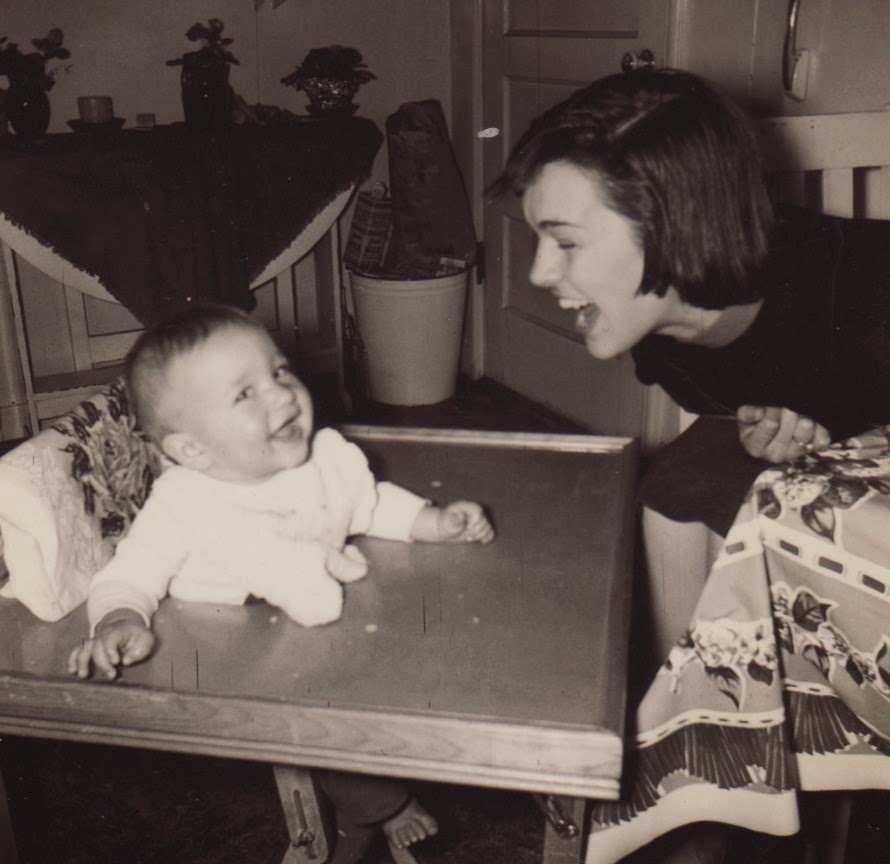
My own youth is largely undocumented. What happened during the first thirty-odd years of my life is contained largely within my own biological and untrustworthy soup of memories, and to a lesser extent in the equally unreliable memory dumps of those who knew me then. Other than that, there are a few photos, public records, and other documented facts—but not many.

That Iggy Pop concert…a great memory, one of the best shows ever—but would I want to relive it? Not a chance. Same goes for that party on the golf course, and the night I lost my virginity, and that South Tucson disco…oh yes, so many events that must be severely edited.

My past is a mystery, even to me. I shudder to think of today’s young people facing the raw records of the future past they are recording today.


I am thankful that so many things I have said and done will never be known. And I am sad that much of it is gone forever, surviving only as fading echoes of that which made me who I am.


Friday, March 27, 2015

The In-Betweens

Last week I completed a new novel and sent it off to my agent. It is, naturally, the novel that will “save” me, but maybe the saving happened while I was writing it and now that it’s written I need saving all over again.


Since sending off that book I’ve had a lot of doing little: a bunch of aborted blog posts, many hours of cruising the nets, repainting an antique toilet seat, talking to the dog, reading gloriously bad sci-fi, putting off getting a haircut, sorting through old story ideas and fragments—basically, bouncing softly from task to task, finishing little (I’ve been working on that toilet seat for ten days, stripping, sanding, painting, repainting…one day it will be beautiful.) and feeling a bit lost. I did manage to film and post a new book trailer, and that was fun in a feathery sort of  way.

My new book comes out in April, there will be a book launch at Wild Rumpus, and a trip out west for the L.A. Times Book Festival, some stuff at AWP here in Minneapolis, and I have a few other things coming up, but until then, I dither.

This is not a bad thing. Yes, I need to write another book. I have a few things started: An alternate history with elves that stalled out on page 120. A novel based on a popular song from the 1990s that is at present one paragraph long. A middle-grade comedy. A darkish mystery novel for grownups. A novel with a profoundly unlikeable protagonist that will require a road trip to Texas. I want to write them all, but I have commitment issue. They all seem impossible, but at the same time, until I pull the trigger, everything is possible.

I’ll be reading from one of these prenatal projects on April 9th at St. Thomas College. Totally WIPped, organized by the formidable Heather Bouwman, will feature several writers reading from their works-in-progress. It is likely that whatever I choose to read will become my next novel, and the cycle will continue.

This in-between time is precious—a time for getting caught up with loved ones, cleaning the laundry room, making ragu alla Bolognese and taking long, aimless walks. I will do all those things and more. Still, there is nothing like diving headfirst into a fresh new novel to give one a sense of purpose. I am looking forward to it.


Saturday, March 21, 2015

The Unboxing of Eden West.

It seems that "unboxing videos" are a thing. Naturally, I have jumped on board with the unboxing video from hell.

When I told my publisher that I wanted to do an unboxing of my new novel, EDEN WEST, I figured it would be an ordinary envelope-opening event with some amusing narration—just a fun way to show off the bound book. 

But I hadn't accounted for the intervention of Carter Hasegawa, an overly imaginative Candlewick editor, who decided to have some fun with this hapless author. The unboxing became somewhat more elaborate than I had anticipated...


I also made a "normal" book trailer that is much shorter and kind of boring, but it tells a bit more about the book itself:


Just three weeks now to publication!

Saturday, March 14, 2015

I Am Afraid. Very Afraid.

One month until the publication of Eden West, and I just received my first author copy. I haven't opened it yet because I'm filming an "unboxing video" in a few days. I made the mistake of mentioning my plans for a video to my publisher, and they decided to make it more challenging than I had anticipated. Check out the package they sent.


Scary, huh? The only thing they'll tell me is, "Be sure to open it outside."

I'm thinking about calling the bomb squad.

Tuesday, March 10, 2015

Flinkwater, just downstream from Bloodwater...

I'm putting on my middle-grade hat on this morning for a cover reveal, even though this book won't be published for another six months. THE FLINKWATER FACTOR is my first solo MG effort. It's the story of Ginger Crump, a very smart, very geeky girl who lives in Flinkwater, the smartest, geekiest town in Iowa. I'll be saying more about Ginger and her adventures later. But for now, let's just have a peek at the cover.


Tuesday, March 3, 2015

Rick Grimes Wants to Kill Us All

I got hooked on The Walking Dead a couple of years ago, binge watched the first three seasons, and now I find that each new episode is the highlight of my TV week. For those of you who are not aficionados, TWD is the story of a small group of characters who are attempting to survive in a world infested by mindless flesh-eating zombies. The core group, led by former sheriff Rick Grimes, are constantly searching for a safe haven in a world gone mad. Along the way they encounter other groups who have attempting to build or defend their own fortified communities. In every case, something goes drastically wrong. Grimes and his crew are forced to defend themselves not only from the ever-present zombies, but from the people they encounter. There is a lot of killing. Grimes’s group eventually prevails, leaving behind death and destruction, and moves on to continue their search for sanctuary.

We root for Rick, Darryl, Glen, Maggie, Carl, Carol, and the others. They are good people, their decisions are driven by their need to survive as a group, and they kill only those who are trying to kill them. They run into a lot of those types of people: Merle, the Governor, Gareth—the list is long. In every encounter, ultimately, they leave behind bodies and broken walls.
 
I started out seeing TWD as a heroic story of redemption, hope, and triumph. I still do, to some extent, but now, as we near the end of season five, my perception is different.

Everywhere Rick & Company go, they encounter people who have created relatively safe, stable environments for themselves—bits of grit that might one day become pearls. Dr. Jenner at the CDC, who might have continued on for years. Hershel and his family on their farm. The Governor’s fortified town of Woodbury. Gareth and the people of Terminus. Dawn and her people at the Atlanta hospital.

All of these nascent societies are terribly flawed. Dr. Jenner is incapable of ever finding a cure. Hershel is a deluded optimist who believes the dead are still human. The Governor is a homicidal megalomaniac. Gareth has built a society of predatory cannibals. Dawn has created a micro police state.

In every case, the arrival of Rick & Company triggers disaster, destroying any possibility that any of these groups might one day grow into a larger, more stable, more productive society.

History shows us that many (if not all) great societies began as tiny, monomaniacal, xenophobic, chauvinistic, ruthless groups. Consider the ancient, bloody sect that after three or four millennia became the great state of Israel. Consider the beer hall origins of modern Germany, or the slave-based economy that eventually became the United States of America.

For the first couple seasons of TWD, I saw Rick & Company as civilized, as moral, as a force for good. But while I remain emotionally with Camp Rick, I now see them as an amoral group intent on promoting their own monomaniacal, xenophobic, chauvinistic, ruthless vision at any cost. The irony here is that they don’t know it, whereas the people they have destroyed—Dr. Jenner, the Governor, Gareth, Dawn, Merle, Shane, and so on—died knowing who and what they were.

In the current season, Rick & Company have joined yet another group. They are safe inside Alexandria, a well-fortified community led by Deanna, a former Ohio congresswoman. Deanna says she has invited the group to join them because of their experience on the outside. Rick is named constable, and the rest of his group take up various jobs within the community.

So far, Alexandria appears to be a secure place populated by “normal” people. We shall see. But whatever transpires, I am certain that Deanna will regret inviting Rick & Company into her world.


Thursday, February 26, 2015

Our Evolving Language

As a Social-Security-eligible baby boomer, I am constantly struggling to accept the changes I cannot unchange. I accept, for example, that all things new do not suck. I accept that a single space between sentences is sufficient. But certain aspects of our evolving language present challenges that have me shouting into the gale. I have ranted previously about the fugly misuse of terms such as “begs the question,” and “ultimate.” I accept that such terms will continue to be misused, and I try not to judge those who do, and I accept the word “fugly.”

But sometimes my calcified mind fails to adjust, as in the case of the headline “Wife of Billionaire Demands 1M Per Month in Child Support.”

My thought upon reading that is, A thousand bucks a month? Why so little? Of course, when I succumb to the clickbait headline, I find that the wife is asking for a million bucks a month, which is far less interesting than a thousand.
 
Until maybe twenty-five years ago, “1M” was generally understood to mean 1000, “M” being the Roman numeral for 1000. Twenty-five years ago if one wanted to abbreviate 1,000,000, one would write 1MM.

Why did this change? Where did the other M go? And why am I having so much trouble adapting?

I blame the “K,” as in kilo, the metric prefix for 1000. We run a 10K (ten times 1000 meters), we talk about things like annual salaries and the cost of cars in terms of Ks. And once K entered the language as shorthand for 1000, people stopped using M so much and sort of forgot what it meant.

Then computers and email happened, and the world went crazy for acronyms and abbreviations. The people using this new technology were relatively young and they had not learned their Roman numerals, so when they needed to shorten the word “million” they used the letter (not the Roman numeral) M.

Okay, that’s reasonable. Roman numerals are rather pretentious and not terribly useful. Language changes. Maybe this baby boomer brain can change too.

Oh, but it burns!

Saturday, January 24, 2015

The Elusive Edge

A few days ago I found myself involved in a twitter conversation with Teri Lesesne, A.S. King, and several other authors and librarians about “edginess” in YA fiction. It was a far-ranging and hard-to-follow (for me) string of tweets loosely gathered around the question of what “limits” librarians and other gatekeepers (including authors) observe when it comes to “edgy” teen fiction. I suggested that one must have a "limit" to have an "edge." The words edgy and limit soon became confusing—we were all using the terms in different ways, but it was valuable conversation nonetheless. 
Deciding what books should be in a middle school library is tough. We authors have it easy—we start with "Include my book!" and go from there. Librarians face a far more complex calculation.
Anyway, that twitter conversation reminded me of a short article I wrote back in 2005, shortly after the publication of Godless. I’m reprinting it here, with a couple of minor edits.

The Elusive Edge
  
The Maiden Rock
There is a short section of the Upper Mississippi between Minnesota and Wisconsin, where the river swells for form a two mile wide, twenty mile long body of water known as Lake Pepin. Tall limestone bluffs overlook the lake on either side. It is arguably the most scenic part of the 2000-mile-long river.
Mary Logue and I have a small second home in the town of Stockholm, population 66, on the Wisconsin shore of Lake Pepin. We go there often—nearly every weekend during the summer—to hide out and recharge.
About three miles upstream of Stockholm is a particularly tall and beautiful bluff known as the Maiden Rock. The Maiden Rock is a sheer limestone cliff that drops 200 feet before hitting the steep, forested talus slope that forms its base. The slope is interrupted briefly by a two lane highway and a railroad track, and then continues all the way down to the shore of Lake Pepin.
The bluff was named for a local legend. A Chippewa girl, it is said, once fell in love with a young man from a neighboring tribe, but she was ordered by her parents to marry another man. In despair, the girl leapt to her death from the tallest cliff she could find—the Maiden Rock.
I am drawn to high places. Heights scare me, but at the same time I love the thrill of the precipice. I visited the Grand Canyon a few years back and tried to walk right up to the edge. As I got closer I found myself crouching and doing this sort of sidling ape-walk. When I couldn’t go any farther I got down on my hands and knees and crawled until I could hang my head over the edge and look straight down. It was...memorable.
So, of course, when I finally visited the Maiden Rock from above, I went looking for the edge of the precipice. I wanted to stand on it like that kid in the movie Titanic on the prow of the ship.
I could see what looked like the edge—an abrupt end to a grassy field. But as I walked toward it I saw that what I had thought was the edge of the precipice was not really the edge at all. There was another grassy shelf, about fifteen feet wide and four feet lower, just beyond it. I let myself down onto the second ledge. From there I could see the highway below, and beyond it the lake. I ape-walked toward the brink, leading with my right foot. When I was about halfway there, I saw yet another shelf, a rocky platform about three feet below the brink. I sat down with my legs dangling over the rock, then let myself down onto the third shelf, which was about the size of two queen-size beds end to end.
That was the point at which I began to crawl. I could see the outermost edge of the forested slope below. But the edge was not the sharp, abrupt brink that it appeared to be from below. It was a rounded, shrubby, uneven transition that kept getting steeper. I went as far as I could, but I still could not see the face of the cliff.
And that is what a height junkie really wants to see: The glass and steel face of the building, the sheer rock surface of the cliff, the underside of the overhang.
#
Very few authors set out to write risky or aggravating novels. Most of us write in hopes of attracting a large, faithful, and enthusiastic audience. You don’t accomplish that by writing things that make people feel bad.
On the other hand, if one is writing so safely that there is not even a hint of discomfort, one risks being both bored and boring.
So what we do is write at the periphery our comfort zone. We push the outer edges of the zone, hoping to convince our readers to share our thrill at flirting with the unknown.
I do not consider myself to be a particularly edgy or dangerous writer. A few of my novels have succeeded in alarming some teachers and parents—Mr. Was contains some graphic violence, No Limit shows the allure of gambling addiction, and Godless is about some kids who start their own religion worshipping a water tower. I certainly don’t push the envelope as vigorously as Judy Blume did back in the 1970s, or as do writers such as A.S. King do today. But I have written about addiction, obsession, domestic violence, suicide, goth culture, idolatry, mental illness, and so forth—topics that may seem “edgy” to some, but are by no means unfamiliar to most teens, or to most readers.
Why did I chose such topics? Each book has its own origin tale, but the one thing they all share is that they deal with matters that were of utmost importance to me when I was a teenager.
Graham Greene once said, speaking of writers, “Our childhoods are our credit balances.” I used to resent having been brought up in a stable, suburban, middle class, environment. Why wasn’t I raised by missionaries in the Congo, or by circus clowns, or by Joan Crawford? How will I ever become a writer if I have no astonishing, exotic, terrifying experiences to write about?
Because I viewed my life as mundane, I read books that let me experience things outside my personal history—war, sex, death, agony, ecstasy, horror, etc. I wanted to know about life on the edge. I wanted to experience the whole human package, from birth to death, and I wanted it NOW.
Teenagers who are bored out of their skulls (by which I mean most of them, much of the time) are compelled to do interesting things, including such old standbys as driving fast, using mind-altering substances, practicing the art of procreation, and performing remarkable stunts on skateboards.
They also perform dangerous intellectual stunts, including hero worship, competitive apathy, extreme narcissism, and abrupt reordering of the universe in the form of sudden religious conversion—which was what I dealt with in Godless.
In fact, most of my YA work is drawn directly from those five or six boring, embarrassing, mind-numbing, awkward, adolescent years—it’s all still there in a midden at the back of my head. I mine that midden—my credit balance—on a daily basis.
Godless, in fact, came straight out of that pile of teenage memories. One summer day I was hanging out with two friends beneath the local water tower. Our boredom led us to debate our respective religions. I was raised Catholic. My friends were Jewish and Lutheran. Our discussion, as I recall it, was something of an irreverence competition, with each of us making the case for our own religion being the worst.
After some discussion, we decided to bag our old religions and make up one of our own. But what to worship? We looked up at the belly of the tank sixty feet above our heads. Our choice was clear: the water tower would serve as our god.
We stole bits and pieces from the great religions of the world. We wrote our own ten commandments, and we bowed to the ten-legged one three times a day. Our mock religion was a great success by teenage standards. It alarmed our parents and kept us entertained for about a week and a half, at which time we became distracted by some other variety of teenage idiocy, and we left our new religion behind.
All of these peculiar things that teenagers do are seductive for the same reason—they push the boundaries of the permissible. In other words, they seek, find, and redefine that elusive and ever-shifting edge.
Which is exactly what we teen novelists do—or try to do—with every book we write. Find something a little thrilling, a little dangerous, a little off-center, and a little scary. Find that brink and sidle up to it. Get as close as you can. Find that place where the air gets thin and your stomach does flip-flops and you realize that you really, really do not want to die. Remind yourself what it feels like to be alive.
Just like a kid.
Thursday, January 22, 2015

End Times Update

It's official. 

The End of the World is scheduled for Sunday, April 26, 2015, at 2:00 p.m. 

Bryan Bliss (I spelled it right this time, B!) and I will be reading from our doomsday cult novels on the same stage at the Loft Literary Center. Probably we should read simultaneously on account of, y'know, the apocalypse. But more likely we will take turns.

This is part of the Second Story Reading Series, curated by the dynamic duo Heather Bouwman and Swati Avasthi. Every couple of months they pair up a couple writers for a short reading and Q&A. I've been to several. It's always a fun event with lots of book people of all ages, and Theme Treats. Not sure what the Theme Treats will be for our reading. Possibly refrigerator leftovers because, y'know, End of Days.

In the meantime, you have three months to expiate your sins. Don't wait till the last minute!


(If you can't wait for April, check out the upcoming Second Story event on February 8 at 2 p.m., featuring Margi Preus and Lise Lunge-Larsen. Their event isn't yet listed on the Loft website, but I'm sure it will be up any moment now.)